
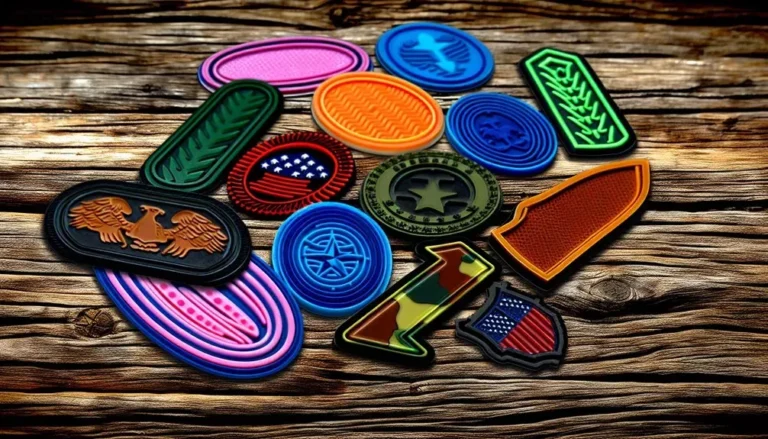
Materials for Durable Custom Patches set the foundation for long-lasting branding on uniforms and gear. Choosing the right durable patch materials means balancing fabric, thread, backing, and finishes that survive washing, sun exposure, and daily wear. From embroidered patches with strong polyester threads to woven patches with tight weaves, the material choice directly impacts colorfastness and edge resilience. PVC patches and heat-sealed patches offer additional resilience in outdoor or rugged environments, while backing and finishing options protect the surface from abrasion. This introductory guide explains how to evaluate options, compare performance, and make decisions that keep logos legible and colors vibrant over years.
To frame this topic through related concepts, think in terms of durable badge textiles, long-wear patch materials, and enduring branding accents. In practice, the discussion shifts to what makes a patch withstand repeated washes, sun exposure, and rough handling, whether you favor fabric-based designs or rugged, molded options. Consider embroidered patches on sturdy fabrics, tight weaving for precision, or PVC patches for weatherproof resilience—each path offers a different mix of detail, texture, and toughness. Backing methods, border finishes, and protective coatings act as the connective tissue that translates material strength into lasting legibility. By matching material choices to use case, care routines, and lifecycle costs, brands can preserve branding impact and reduce replacements over time.
Materials for Durable Custom Patches: Laying the Foundation for Longevity
Materials for Durable Custom Patches set the trajectory for long-term performance. From the fabric base to the embroidery thread, backing, and protective finishes, each choice shapes resistance to washing, abrasion, and sun exposure. When we discuss these materials, we’re focusing on real-world durability—the ability to keep colors vivid, letters legible, and attachment secure across seasons.
Choosing durable patch materials involves evaluating how base material, backing, and finishes perform under frequent washing and outdoor use. Emphasize colorfastness, stitch integrity, and edge durability as primary metrics when selecting embroidered patches or woven patches as part of a cohesive patch strategy.
Embroidered Patches vs Woven Patches: How Durable Patch Materials Differ
Both embroidered patches and woven patches are built from distinct material stacks, delivering different durability profiles. Embroidered patches rely on a fabric base and high-strength threads, with polyester threads offering strong colorfastness and edge stability. Woven patches, by contrast, use tightly interlaced yarns for a flatter surface and sharper details, trading some thickness for long-wearing efficiency.
For durability, consider the end-use: for high-wear branding with bold logos, embroidered patches can endure frequent washing when backed properly; for intricate typography or small text, woven patches maintain legibility while staying resilient. The right mix of durable patch materials depends on appearance goals and laundering expectations.
PVC Patches and Non-Fabric Options for Extreme Wear Environments
PVC patches stand out for weather resistance, abrasion tolerance, and color stability. Molded from durable plastics, they maintain a bold 3D presence and resist moisture and heavy wear better than many fabric-based patches.
In harsh environments, consider heat-sealed patches as a balance between convenience and longevity. Backed by heat-activated adhesives that require fabric compatibility, heat-seal options can extend your patch’s life when sew-on is impractical, though performance varies with washing and sun exposure.
Backing, Borders, and Finishes That Extend Patch Longevity
A patch’s longevity is as much about backing and border work as the face design. Sew-on backing typically provides the strongest attachment for durable patches, while Merrow borders reinforce edges to resist fraying and peeling.
Finishes and coatings—UV protection, laminates for PVC, and colorfast dyes—preserve appearance under sun and wash cycles. Choosing the right border and edge finish is a practical lever for long-term durability across embroidered and woven patches.
Care, Washing, and Sun Exposure: Preserving Colorfastness Over Time
Washing cycles, detergents, and UV exposure can erode color and stitching if materials aren’t chosen with care. Selecting durable threads and colorfast inks reduces fading and edge wear, preserving legibility on fabric-based patches through many launderings.
Outdoor or athletic use amplifies wear; PVC patches or leather patches may resist abrasion differently than fabric patches, so aligning material choice with care routines is essential for longevity.
Practical Material Selection: A Step-by-Step Guide for Your Use Case
Start with the end-use environment: indoor or outdoor, high wash vs low wash, and the required visual impact. This context guides the choice among embroidered patches, woven patches, PVC patches, or leather/rubber options.
Then select base material, thread, backing, and edge finish, guided by a simple decision tree. Pilot a small batch, test for colorfastness, adhesion, and laundering tolerance, and assess lifecycle costs to ensure durable patch materials align with branding goals.
Frequently Asked Questions
What are the key considerations in the Materials for Durable Custom Patches when designing patches for uniforms and gear?
Durability starts with the right combination of base fabric, thread quality, backing, and protective finishes. Assess how each material resists washing, abrasion, sun exposure, and daily wear to keep colors, stitching, and legibility over time. This materials framework helps balance performance, appearance, and cost.
In terms of durable patch materials, how do embroidered patches compare to woven patches?
Embroidered patches use a fabric base with strong embroidery threads, offering rich color saturation and bold branding, especially with polyester threads for durability. Woven patches deliver finer detail and a lower profile with robust yarns, making them durable under long wear but differently textured. Choice depends on branding needs and edge durability.
What role do PVC patches play within Materials for Durable Custom Patches when durability and outdoor use are priorities?
PVC patches are molded plastics bonded to backing, delivering excellent weather resistance, color stability, and abrasion resistance for outdoor gear and rugged branding. They maintain legibility and shape in harsh conditions, though the look differs from fabric patches.
How does backing choice affect the longevity of heat-sealed patches in durable patch materials?
Backing determines attachment strength and wash tolerance. Sew-on backings offer the highest long-term durability, while iron-on and heat-seal backings require testing for fabric compatibility and care, especially for heat-sealed patches.
What finishes and border treatments best extend the life of embroidered patches and woven patches?
Merrow borders provide durable edge reinforcement, helping to prevent fraying. UV coatings and laminates protect colorfastness, while edge finishing and appropriate stitch density improve long-term wear.
How should care and washing influence the selection of Materials for Durable Custom Patches for outdoor gear?
Consider wash cycles, detergents, and sun exposure; select colorfast threads and dyes and test patches under real laundering conditions. This ensures the patch materials maintain color, adhesion, and legibility across seasons.
| Topic | Key Points |
|---|---|
| Durability factors | Durability comes from base material, thread quality, backing/adhesive, and finishes. Each element affects wash resistance, abrasion, sun exposure, and daily wear. Aim for secure attachment, colorfast design, and a legible, long-lasting surface. |
| Patch materials and performance | – Embroidered: fabric base (twill/felt); polyester or poly-cotton threads for strength and colorfastness; high tensile strength and fade resistance. – Woven: interlaced threads for a flat, flexible surface; tight weaving and sturdy yarns yield durability and detail with low profile. – PVC: molded plastic patches with strong weather resistance, color stability, and abrasion resistance; bold 3D look. – Leather/Rubber: durable, moisture-resistant options with distinctive texture (leather) or flexible, colorfast surfaces (rubber/PU). |
| Backing, attachment, and finishes | – Sew-on backing: typically most durable long-term; stitch lines reinforce and patch becomes garment part. – Iron-on backing: quick attachment; longevity depends on heat resistance and washing; test for durability. – Heat-seal/adhesives: strong bond with compatible fabrics; test fabric compatibility and care routines. – Border/edge finishes: Merrow borders resist fraying; laser-cut borders can wear at edges if patch face is thin. – Finishes/coatings: UV-protective coatings, laminates for PVC, colorfast dyes; laminates protect against scratches and scuffs. |
| Environmental considerations and care | – Wash cycles and detergents: hot water and harsh detergents accelerate fade and edge wear; choose colorfast inks and durable threads. – UV exposure: sun can fade colors; UV-stable threads/dyes extend outdoor life. – Weather and abrasion: outdoor gear faces wind/rain/abrasion; material properties should align with expected conditions (PVC/leather vs fabric). |
| Practical guidelines for selecting materials | 1) End-use environment: outdoor/high-wash may favor PVC or leather for longevity. 2) Garment compatibility: sew-on for denim/heavy fabrics; iron-on for heat-tolerant fabrics. 3) Visual requirements: embroidered for bold logos; woven for detail; PVC for bold, rugged looks. 4) Budget and scale: durability often increases cost; pilot small batches to test. 5) Colorfastness and care: ensure colorfast dyes and threads for frequent washing or sun exposure. |
| Practical comparison of main options | – Embroidered vs woven: Embroidered yields strong color saturation and branding impact; woven offers precision and lower profile with durable yarns. – PVC vs fabric: PVC is highly durable and weather-resistant; fabric patches are traditional and tactile but require protective backings for longevity. – Backing choices: Sew-on typically most durable; iron-on/heat-seal offer convenience but require testing. |
| Cost, durability, and design trade-offs | Durability often comes with higher cost (quality embroidery/weaving, strong backing, protective finishes). Pilot batches help verify value, colorfastness, and attachment under real conditions to minimize replacements and maximize branding impact. |
| Step-by-step guide to choosing materials | 1) Define use case (indoor/outdoor, wash frequency, look). 2) Choose core patch type (embroidered, woven, PVC, leather/rubber). 3) Select base material and thread (e.g., polyester for embroidered). 4) Decide backing (sew-on for longevity; iron-on/heat-seal for convenience; test). 5) Choose edge finish and coatings (Merrow border; UV protection/lamination). 6) Test and validate (wash, sun, abrasion tests). 7) Review lifecycle cost (lifecycle, replacements, branding impact). |
| Conclusion | Materials for Durable Custom Patches should be understood as a holistic framework that guides material choices from base fabrics and threads to backing, finishes, and care. By aligning material selection with end-use conditions and maintenance, patches maintain color, legibility, and attachment over time. Whether choosing embroidered, woven, PVC, or leather/rubber options, durable patches emerge when materials, backings, and edge finishes are matched to expected wear and laundering. Materials for Durable Custom Patches invites designers to consider environment, care routines, and lifecycle to keep branding vibrant and secure across seasons. |
Summary
HTML table explaining key points from the base content and a descriptive conclusion optimized for SEO with the phrase Materials for Durable Custom Patches in the opening sentence.